How Often Should You Repaint a Home Exterior in Miami?
Miami's climate accelerates paint wear compared to temperate climates. Learn the typical repaint cycles for different surfaces and what signs to watch for.
By OOH! Editorial Team
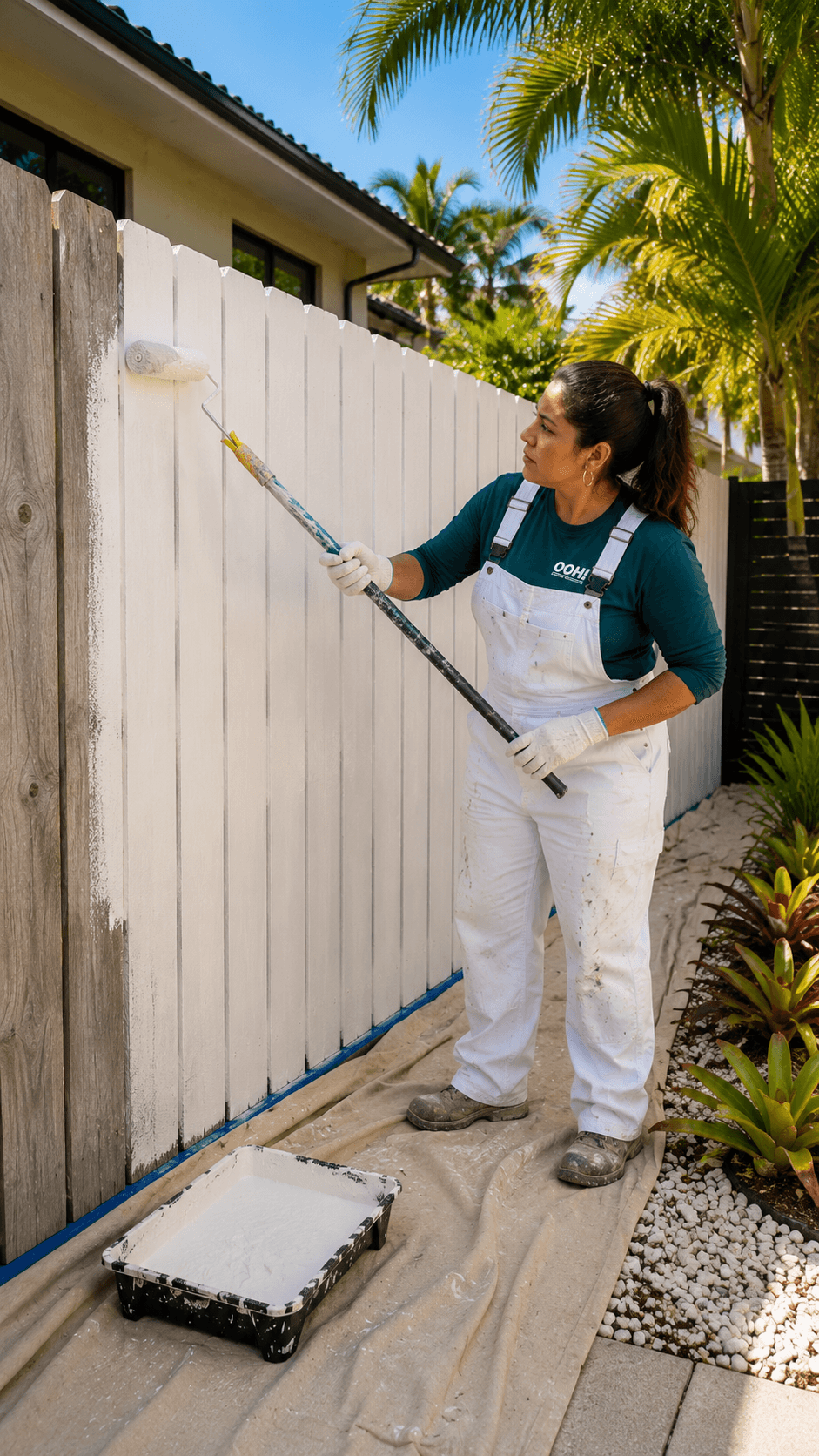
In a temperate climate, a quality exterior paint job can last ten years or more. In Miami, you should expect shorter cycles — sometimes significantly shorter, depending on your surface type, location, and how well the previous job was done. Understanding the typical timelines for each surface type, and knowing what warning signs to watch for, helps you stay ahead of the deterioration curve instead of chasing it.
Why Miami accelerates paint wear
Four environmental factors combine to degrade exterior paint faster in South Florida than in most U.S. markets:
- UV intensity — South Florida's solar angle and minimal cloud cover from October through April means extreme UV exposure, which breaks down paint binders, fades pigments, and causes chalking
- Year-round humidity — constant moisture cycling causes expansion and contraction in coatings and substrates, eventually leading to cracking, blistering, or delamination
- Biological growth — warm, humid conditions are ideal for mold and mildew, which colonize paint films and physically degrade the coating over time
- Salt air — properties within a few miles of the coast experience accelerated oxidation on metal surfaces and additional stress on coatings from airborne chlorides
None of these factors is individually catastrophic, but together they compound. A home that's also poorly ventilated, faces west or south, or sits within a block of the ocean will age its paint faster than a home shaded by mature trees a mile inland.
Typical repaint cycles by surface type
These ranges assume a quality product was applied over properly prepared surfaces. They are general estimates — your contractor's on-site assessment will be more accurate than any published table.
| Surface | Typical Cycle | Key Factors |
|---|---|---|
| Stucco | 5–8 years | Product quality, coastal proximity, UV exposure |
| Concrete block | 7–10 years | Coating type, moisture intrusion history |
| Wood siding | 3–5 years | Wood species, shading, caulk condition |
| Wood trim and fascia | 3–5 years | End-grain exposure, sun angle, paint quality |
| Metal (doors, frames, railings) | 4–6 years | Rust treatment, primer type, coastal exposure |
Important qualification
A poor application over inadequately prepared surfaces will fail in half the time or less. If the previous paint job was done without proper cleaning, priming, or caulking, these ranges don't apply — you may see failure in two to three years regardless of surface type.
Warning signs your exterior needs painting
You don't need to wait for a scheduled repaint if you're seeing active signs of failure. Walk around the exterior and look for:
- Chalking — a powdery residue on the surface when you run your hand across it. Indicates UV-degraded binder and significant weathering.
- Fading — loss of original color, especially on south and west-facing walls. Cosmetic but signals aging paint.
- Cracking or crazing — fine network cracks in stucco or paint film indicate brittleness and allow moisture entry. Should be addressed promptly.
- Blistering or bubbling — paint film separating from the substrate. Usually indicates moisture trapped beneath the film.
- Peeling — advanced delamination. At this stage the substrate is often exposed and can be damaged by continued moisture.
- Mold or mildew growth — dark staining, particularly in shaded areas, corners, and along the roofline. Needs biological treatment before repainting.
- Failed caulk — gaps around windows, doors, and utility penetrations. Even if the paint looks acceptable, failed caulk is water intrusion waiting to happen.
- Rust staining — brown streaks below metal fixtures, rebar locations in stucco, or railings. Indicates corrosion beneath the surface.
Factors that shorten or extend the cycle
The ranges above are generalizations. These are the specific factors that move a property toward the shorter or longer end:
Factors that shorten the cycle
- Properties within two blocks of the ocean or bay (salt air, spray)
- Little to no shade — west and south-facing walls in full sun all day
- Low-quality paint used on the previous job
- Inadequate surface prep on the previous job
- Untreated biological growth at time of last painting
- Active moisture intrusion through the building envelope
Factors that extend the cycle
- Premium acrylic or elastomeric coatings with mildewcide
- Thorough pressure washing and biological treatment before painting
- Full re-caulking of all joints and transitions
- Mature shade trees on the west and south sides of the structure
- Lighter colors that reflect rather than absorb solar radiation
- Properties set back from the coast
The cost of waiting too long
Exterior paint is a weather barrier, not just a cosmetic finish. Once a coating fails — cracks, peels, or delaminates — moisture enters the substrate. On a stucco exterior, moisture behind the stucco skin leads to efflorescence, spalling, and eventually structural stucco damage that requires patching before any painting can happen. On wood, moisture leads to rot that may require board replacement.
The cost of repainting before failure is significantly lower than the cost of painting plus substrate repair after failure. Keeping to a reasonable maintenance cycle — not waiting until the surface is visibly deteriorating — is the most economical approach.
If you're not sure whether your exterior needs attention now or can wait another season, an on-site assessment from a qualified contractor will give you a clear answer. See our exterior painting service page or read more about what to look for in exterior paint for South Florida.
Frequently asked questions
Is it possible to just spot-paint instead of repainting the whole exterior?
Spot painting can address localized failures temporarily, but blending new paint into an aged exterior is difficult — paint colors shift over time, and the new areas will usually be noticeably different. Full repaints are generally more cost-effective and deliver a consistent result. Discuss the specific scope with your contractor after an assessment.
What if I just power wash and leave it — do I really need to repaint?
Power washing removes surface contamination but doesn't restore the protective function of a degraded paint film. If the coating is chalking, cracking, or otherwise failing, cleaning it doesn't prevent moisture from entering the substrate. Repainting restores the weather barrier.
Can I repaint over existing mold without treating it first?
No. Painting over active mold growth will not kill the biological material — it will continue to grow under the new coat. Mold must be treated with an appropriate biocide solution before painting begins. This is a non-negotiable prep step.
OOH! Editorial Team
Painting professionals in the Miami–Fort Lauderdale area