How Miami Humidity Affects Interior Paint and Drying Time
South Florida's climate creates specific challenges for interior paint adhesion, drying, and long-term durability. Here's what to know before your next project.
By OOH! Editorial Team
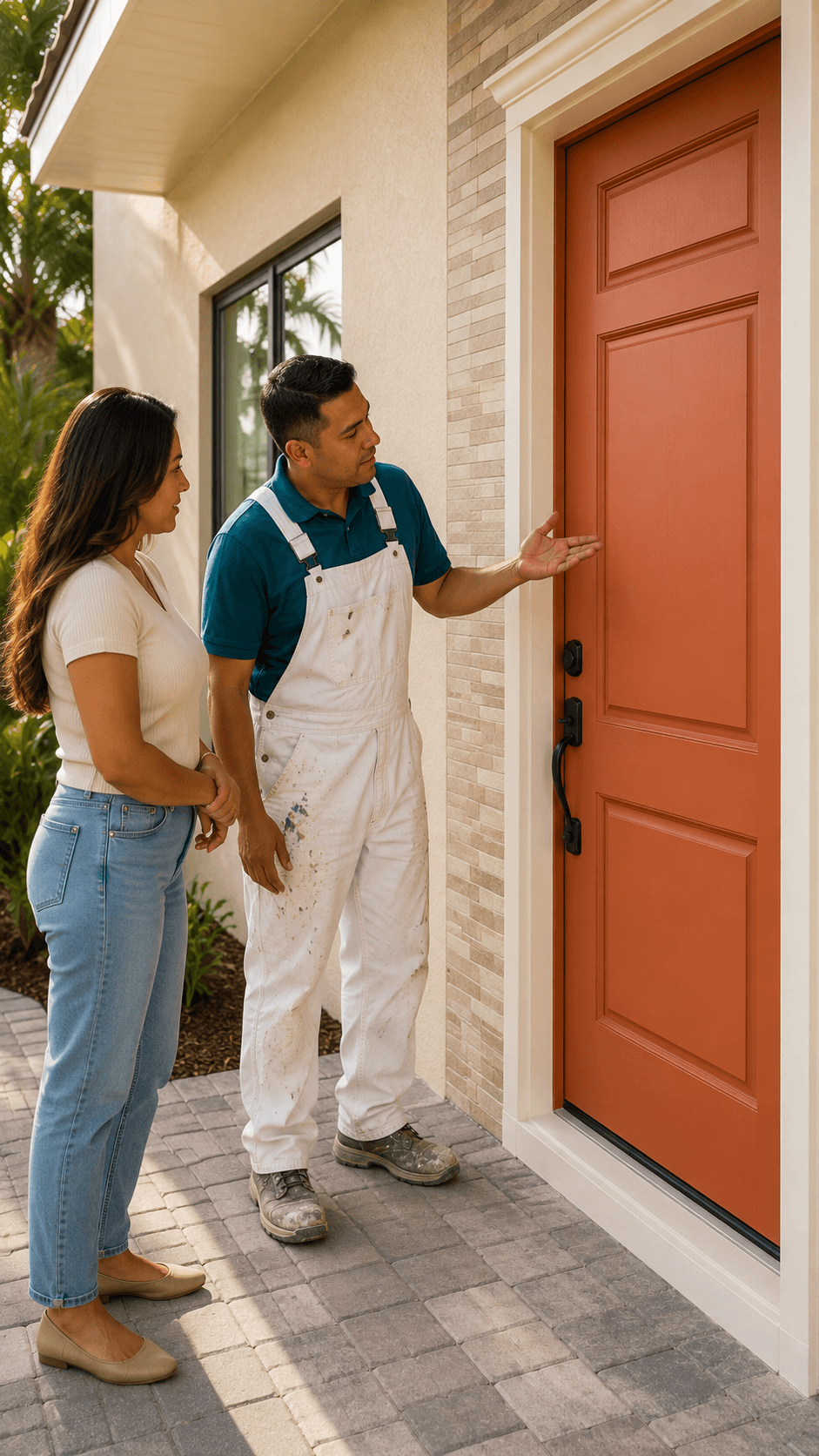
If you've ever watched freshly painted walls stay tacky for hours longer than the can said they should, humidity is almost certainly the reason. In Miami, where relative humidity regularly climbs above 80% in summer and rarely drops below 60% even in winter, moisture in the air directly interferes with how interior paint cures. Understanding what's happening — and how professional painters manage it — helps you make smarter decisions about timing, products, and conditions for your project.
How humidity interferes with paint drying
Most interior paints used today are water-based latex or acrylic formulas. These paints dry through a process called evaporation — the water carrier in the paint migrates out of the wet film and into the surrounding air, leaving behind the pigment and binder.
Relative humidity (RH) measures how much water vapor the air already contains relative to the maximum it can hold at that temperature. When RH is high, the air is already laden with moisture and has limited capacity to absorb more. Paint drying in high-humidity air evaporates slowly because the air can't pull moisture away efficiently. The result: paint stays wet — and then tacky — for significantly longer than the product's stated dry time.
Most paint manufacturers specify application conditions in their technical data sheets — commonly a temperature range between 50°F and 90°F and relative humidity below 85%. Miami routinely approaches or exceeds that upper RH limit in summer, particularly in early morning and after afternoon rain. Applying paint outside those conditions doesn't necessarily mean failure, but it does mean extended drying times and heightened risk.
Miami's humidity by season
Miami doesn't have a dry season in the way that Midwest or West Coast cities do, but the variation between seasons is meaningful for painting projects:
- June through September (wet season): Relative humidity frequently exceeds 80–85%, particularly in mornings and after afternoon thunderstorms. Rainfall is heavy and frequent. Interior projects in unconditioned or poorly ventilated spaces are most challenging during these months.
- October through November: Humidity begins to ease as summer moisture patterns shift. A transitional period that can be favorable for interior projects.
- December through March (dry season): Relatively lower humidity by Miami standards — often 60–70% — with less rainfall and more stable conditions. The preferred window for larger or more sensitive interior projects.
- April through May: Humidity climbs again as the rainy season approaches. Still manageable with proper HVAC control for interior work.
"Dry season" is relative in Miami. Even in January, RH is typically higher than what most paint product guidelines consider optimal. This is why professional contractors don't rely on seasonal scheduling alone — climate control inside the home is the more reliable lever.
Tip
Running your home's central air conditioning during and after painting is one of the most effective ways to control drying conditions. A properly maintained AC system dehumidifies the air as part of its normal operation — keeping interior humidity well below outdoor levels even on a 90% RH day outside.
What can go wrong in high humidity
When paint is applied or dries in conditions that are too humid, several failure modes can develop:
- Prolonged tackiness: Paint that won't fully harden is vulnerable to picking up dust, pet hair, and fingerprints. It may feel permanently soft rather than curing to a hard film.
- Blistering: Moisture trapped beneath the paint film can cause bubbles or blisters as it tries to escape during or after application.
- Poor adhesion: If the substrate itself has absorbed moisture (common with drywall in humid spaces), paint may not bond properly and can peel prematurely.
- Lap marks: When sections dry unevenly due to humidity variation across a wall, joining wet edges to dry ones creates visible marks that are difficult to correct after the fact.
- Mold growth: Paint applied over or near a moisture-laden surface that doesn't dry thoroughly can create conditions where mold spores colonize behind or within the paint film.
How contractors manage humidity
Experienced painting contractors in South Florida develop specific approaches to working in humid conditions. These aren't optional refinements — they're standard practice:
- HVAC operation: Running the home's air conditioning throughout the project keeps interior humidity in a controlled range. This is the single most effective tool available for interior projects.
- Portable dehumidifiers: In rooms without adequate HVAC coverage — enclosed bathrooms, conditioned but poorly circulated spaces — a portable unit running during and after painting accelerates drying.
- Scheduling around peak humidity: Starting projects in the morning, after overnight humidity peaks have passed and the AC has had time to condition the space, tends to produce better conditions than afternoon starts following heavy rain.
- Product selection: Choosing paint formulas with additives that resist moisture-related failures — including mold-resistant primers and paints with flexible binders — reduces risk in high-humidity environments.
- Substrate moisture testing: Before painting walls near known moisture sources (exterior walls, bathrooms, areas with prior water damage), professional contractors may check substrate moisture to ensure conditions are within acceptable range.
Signs that humidity caused a paint failure
If you're evaluating existing paint in a Miami home before planning a project, look for these signs of humidity-related failure in the existing paint film:
- Peeling or bubbling paint, particularly on exterior-facing walls or in bathrooms
- Soft, spongy paint that dents when pressed and doesn't spring back
- Staining or discoloration that bleeds through multiple layers of paint — often indicative of water intrusion
- Musty odor behind walls or at baseboards, which can suggest mold activity
- Paint that appears powdery or chalky when rubbed — a sign the binder degraded
If you find these signs, the fix isn't simply repainting. The underlying moisture source needs to be identified and resolved first; painting over a wet or compromised substrate will produce the same failure again, often faster.
Oil-based vs. latex in humid climates
Oil-based paints dry through oxidation rather than evaporation, which means humidity has less direct impact on their dry time compared to water-based paints. This was historically cited as an advantage in humid climates. However, modern acrylic latex formulas have largely closed the performance gap, and oil-based paints come with their own set of trade-offs: longer cure time overall, stronger VOC emissions, more difficult cleanup, and a tendency to yellow over time in interior applications.
Most professional painters in Miami now work primarily with high-quality acrylic latex products, managing humidity through climate control rather than product chemistry. Oil-based paints remain relevant for specific applications — some trim work, high-wear surfaces, and certain metal substrates — but they're not the standard solution to Miami's humidity challenge.
For a guide to choosing the right sheen for humid rooms in your home, read best interior paint finishes for Miami homes and condos.
OOH! Editorial Team
Painting professionals in the Miami–Fort Lauderdale area