Move-In and Move-Out Painting: A Checklist for Miami Properties
A practical guide for landlords, property managers, and tenants — covering what typically needs to be painted, how to coordinate timing, and how to set realistic expectations.
By OOH! Editorial Team
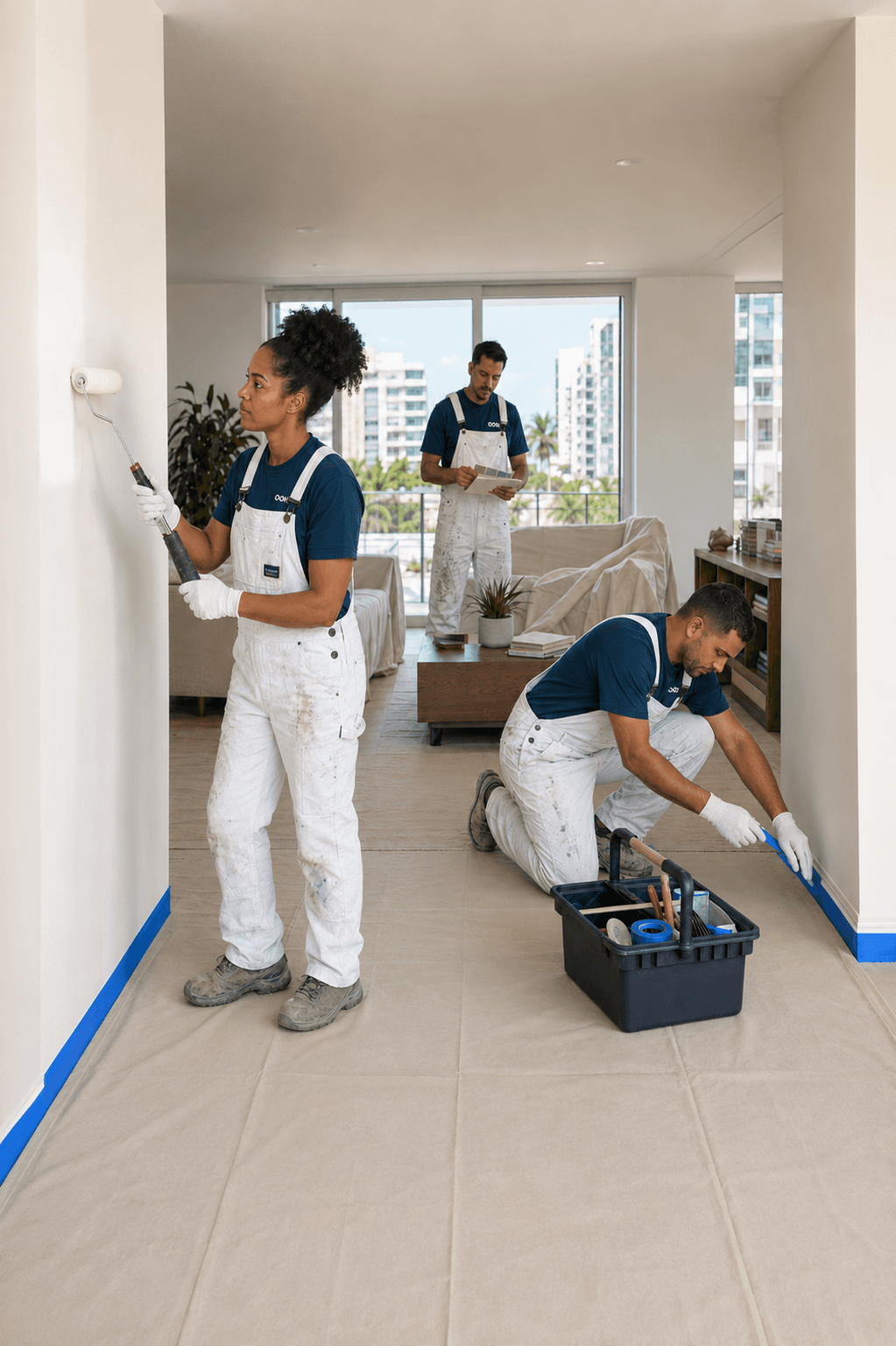
Between tenants is the most common window for interior painting in Miami's residential rental market — and the most time-pressured. Vacancy costs money. Paint that's not dry by move-in day creates problems. Scope that's poorly estimated leads to crews scrambling or projects running over. This guide gives landlords, property managers, and tenants a clear framework for what typically needs to be painted, how to scope the work accurately, and how to coordinate timing to minimize days between occupants.
Who typically needs this service
Miami has one of the most active residential rental markets in the country. High turnover in condo-heavy buildings, a large inventory of single-family rentals, and significant short-term and furnished rental activity means that landlords and property managers regularly need to refresh units between occupants.
The primary parties who benefit from a streamlined move-in/move-out painting process:
- Individual landlords — particularly those with one to three properties where every vacant day matters financially
- Property management companies — managing a portfolio means getting units turned on a reliable schedule
- Tenants — departing tenants who agreed in their lease to return the unit in good painted condition
- Real estate investors and flippers — fresh paint is one of the highest-ROI preparations before listing or re-leasing
Pre-move-out assessment
Before scheduling a painter, document the unit's current condition. This step matters for two reasons: it establishes scope for pricing, and it creates a baseline if there are disputes about damage versus normal wear.
Walk through the unit and note:
- Wall condition room by room — scuffs, marks, holes, stains, and areas of peeling or fading
- Ceiling condition — particularly in bathrooms and kitchen areas where moisture can cause staining
- Trim and baseboards — normal scuffing along baseboards is expected; significant damage to door frames or window sills may need more than paint
- Door condition — painted doors accumulate scuffs around hardware and at push points
- Kitchen and bathroom walls specifically — these areas see the most wear and often need full coats rather than just touch-ups
- Whether the unit has been painted previously within the tenancy, and when
Normal wear vs. damage
Florida landlord-tenant law distinguishes between normal wear and tear (which a landlord typically cannot charge back to a tenant) and damage beyond normal use (which they can). Light scuffs and minor marks on walls after a multi-year tenancy are generally considered normal wear. Large holes, significant staining, or unauthorized paint colors are typically considered damage. Consult legal guidance for your specific situation — this article doesn't constitute legal advice.
Standard scope for a unit refresh
The scope depends on the current condition, the lease term that's ended, and the landlord's standard for turnover quality. Here's how different areas typically get handled:
Walls
Spot painting (touching up individual marks) is cheaper and faster, but it rarely matches perfectly — especially if the original paint has faded or changed sheen with time. A full coat on each room produces a consistent result and a fresh appearance. For high-turnover rentals where appearance matters for new tenant attraction, full coats are standard practice.
Ceilings
Ceiling repainting depends on condition. In bathrooms and kitchens, moisture and humidity often cause ceiling staining that's visible and affects perception of the unit's cleanliness. These typically warrant repainting. Bedroom and living room ceilings can often go longer between full repaints unless they've been affected by leaks.
Trim and doors
Trim and doors accumulate marks over a tenancy. Whether to paint them depends on current condition and the standard for the unit. Rental units typically use semi-gloss on trim (durable and washable), so properly maintained trim may only need spot touch-up. Doors in heavy-traffic areas often need full repaints at turnover.
Kitchen and bathrooms
These rooms see the most use and typically need the most attention at turnover. Kitchens accumulate grease that must be cleaned before painting. Bathroom walls benefit from moisture-resistant or mold-resistant paint, and if they haven't been repainted recently, they're usually part of the turnover scope.
Timing and coordination
The painting window is typically the last two to three days before move-out or the first two to three days of vacancy before move-in. Coordinating this window in advance — rather than calling a painter after the outgoing tenant is already gone — is the most effective way to minimize vacancy.
Key timing considerations:
- Schedule the painting estimate before the outgoing tenant leaves — an estimator can assess the scope while the unit is still occupied (with appropriate notice)
- Build at least 48 hours between painting completion and move-in for ventilation and paint cure
- In Miami's humidity, fresh paint in a closed, unventilated unit can remain tacky longer than expected — confirm the property's HVAC will be running during the curing period
- If other trades (cleaning, repairs) are also entering between tenants, coordinate so painting happens after any construction work and before final cleaning
Move-out painting checklist
For landlords and property managers conducting a turnover assessment:
- □ Document wall condition in all rooms with photos before tenant departure
- □ Note any holes from picture hangers, anchors, or hardware
- □ Assess ceiling condition in kitchen and bathrooms specifically
- □ Check trim and baseboard condition along high-traffic paths (hallways, doorways)
- □ Identify any non-standard colors the tenant may have painted with
- □ Schedule estimate before the outgoing tenant's final day if possible
- □ Confirm if prior colors match the standard unit color or need to be restored
- □ Note any mold or mildew on bathroom/kitchen surfaces that will require treatment before painting
Move-in prep checklist
For incoming tenants or landlords preparing for new occupancy:
- □ Confirm painting is complete at least 48 hours before move-in
- □ Verify HVAC ran during and after painting to assist drying in humidity
- □ Do a walkthrough specifically to confirm all painted surfaces are dry and not tacky
- □ Document the unit condition with photos on move-in day
- □ Note the paint colors and sheens used in each room for future touch-up reference
How to minimize vacancy days
The key variable is lead time. Landlords who call a painter the day after a tenant gives notice have weeks to plan. Those who call after the unit is already vacant are already behind. Getting on a contractor's schedule in advance and having the scope pre-assessed means painting can begin the day the outgoing tenant vacates.
For qualifying projects, a coordinated crew can typically complete a standard apartment or condo unit paint in one to two days. This is the scenario where a compressed timeline model delivers real financial value — each additional day of vacancy in a Miami rental unit represents real revenue not collected.
To start the process, visit our move-in/move-out painting service page, or use our estimate form to confirm availability in your area. For multi-unit or commercial properties, see how to minimize business downtime during commercial painting.
Frequently asked questions
How far in advance should I schedule a move-out paint?
As early as possible — ideally two to four weeks before the vacancy date. This gives you time to get an estimate, confirm the scope, and secure a slot on the contractor's schedule that aligns with your vacancy window.
Should paint color stay the same for a rental turnover?
In most cases, yes. Maintaining a consistent neutral color throughout the unit simplifies future touch-ups and avoids situations where a room is a different color than adjacent spaces. Neutral warm whites or soft grays are the standard choice for Miami rental units because they're universally appealing and easy to maintain.
Does Miami's humidity affect how soon a newly painted unit is ready for occupancy?
Yes. High humidity extends drying time, particularly for interior latex paints. Keeping the HVAC running during and after painting significantly reduces this. In very humid conditions without climate control, paint can remain tacky for significantly longer than it would under controlled conditions.
OOH! Editorial Team
Painting professionals in the Miami–Fort Lauderdale area