How Long Does Interior Painting Take? A Room-by-Room Guide
A practical breakdown of realistic painting timelines for bedrooms, living rooms, kitchens, and whole homes — and the factors that affect each estimate.
By OOH! Editorial Team
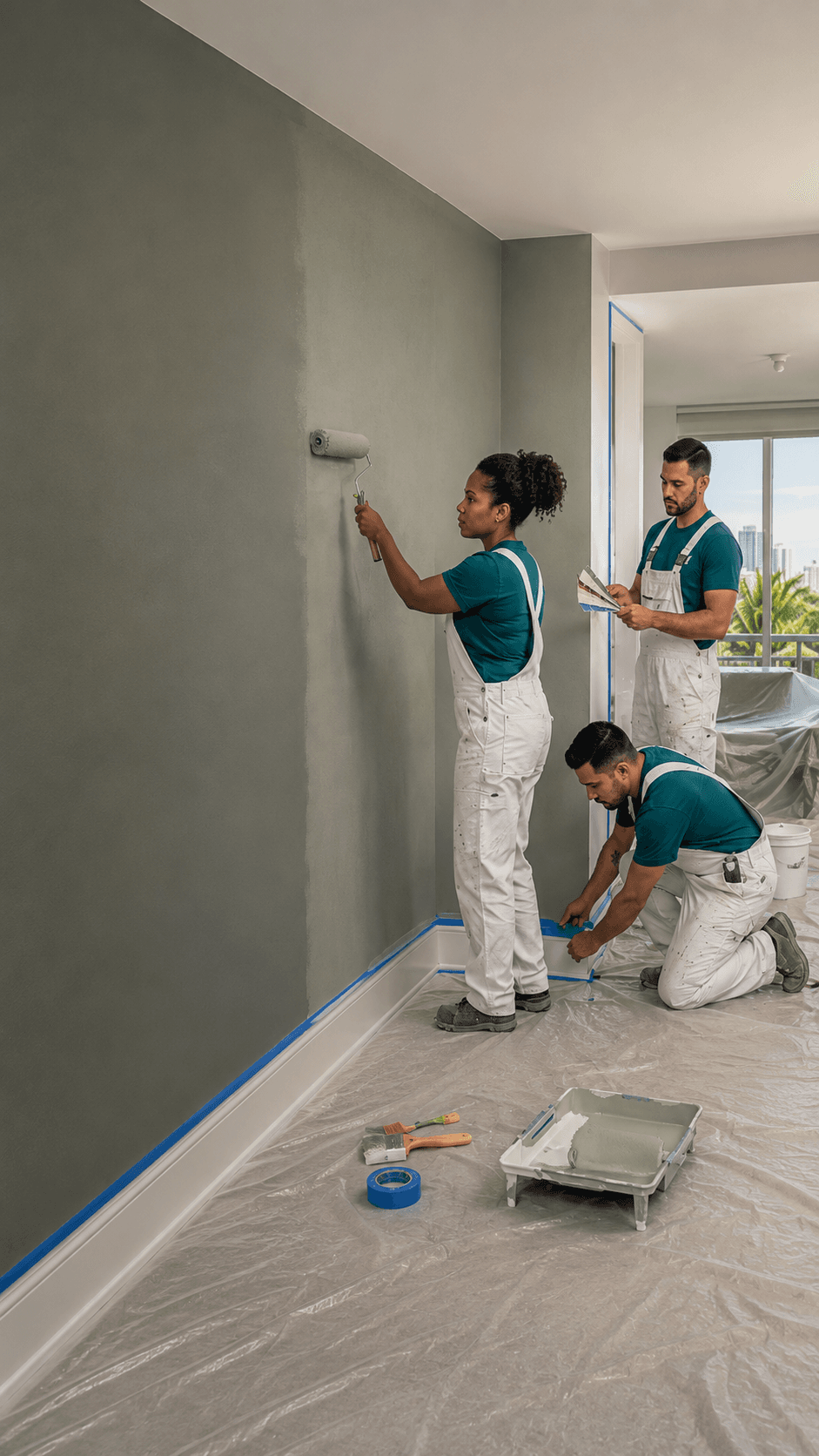
"How long will this take?" is almost always the second question a homeowner asks — right after price. The honest answer is that painting timelines vary a lot depending on room size, surface condition, ceiling height, and how many people are doing the work. This room-by-room breakdown gives you realistic expectations for each space in a typical Miami home or condo, along with the factors that push timelines shorter or longer. Use it as a planning tool, not a fixed guarantee — every project is different, and your contractor's assessment of your specific space will be more accurate than any generic guide.
Bedroom
A standard bedroom — roughly 12×12 feet with eight-foot ceilings — is typically the most straightforward room to paint. An experienced painter can handle walls, ceiling, and trim in a full workday, though the hours depend heavily on prep and the number of coats required. A room that just needs a color refresh over a similar existing tone will move faster than one going from a dark accent wall to a light neutral.
Factors that add time to bedrooms include:
- Walk-in closets — these are effectively small additional rooms, with lots of edge work
- Ceiling heights above nine feet, which require ladders or scaffolding and slower cutting-in
- Multiple windows with detailed casings
- Tray ceilings or coffered ceilings that require separate cut lines and sometimes a second color
- Significant nail holes or surface damage requiring patching before painting
On a coordinated crew project, multiple bedrooms can run in parallel — one painter cutting in while another rolls — which is one reason professional crews can compress timelines that would otherwise span multiple days for a solo painter.
Bathroom
Bathrooms are small but labor-intensive. The confined space means a lot of cutting-in around fixtures, tile borders, vanities, and mirrors — work that takes patience and slows production relative to square footage. A typical master bathroom can take nearly as long as a bedroom, despite being a fraction of the size.
Key considerations for bathrooms:
- Only the painted drywall areas are painted — tile surrounds and tub enclosures are masked off
- Ventilation matters: in Miami's climate, bathrooms trap moisture, which affects how quickly paint sets up. Running the exhaust fan during and after application helps
- Mold-resistant paint formulas are typically recommended for bathroom walls and ceilings in South Florida
- Shower ceiling areas above tile may need a mildew-resistant sheen — typically semi-gloss or satin
Living room and open-concept spaces
The living room is usually the most time-consuming single room in a home. In Miami condos and newer construction, open-concept layouts combine living, dining, and kitchen into one large connected space — which means more linear footage of cutting-in, larger ceiling areas, and more complex transitions around doorways, archways, and accent walls.
Ceiling height is a major factor here. Many Miami homes have volume ceilings of 10 to 12 feet, which require additional equipment and slower production on the cut lines. An open-concept great room with 11-foot ceilings, large windows, and a feature wall will take meaningfully longer than a standard-height living room in a 1980s townhouse.
If you're using a different color on an accent wall, that adds a masking step and often a separate pass. Two-tone or three-tone rooms require more setup time but are very achievable for a professional crew within a single workday in most cases.
Kitchen
Kitchen walls present a specific challenge: grease. Even in a well-maintained kitchen, cooking residue accumulates on walls near the stove and on adjacent surfaces. Paint applied over a greasy surface won't bond properly, which means degreasing is a non-negotiable prep step before any primer or paint goes up.
In addition to degreasing, kitchens typically involve:
- Cutting in around upper and lower cabinets, backsplash tile, and appliances
- Protecting countertops, appliances, and flooring from overspray and drips
- Painting above upper cabinets — an area that's easy to miss but visible when overhead lights are on
- Soffit areas above cabinets, which may be a different color than the walls
If cabinet painting is part of the project, that's a separate scope with its own timeline — it involves hardware removal, degreasing, sanding, priming, and spray application, and shouldn't be conflated with wall painting. See the cabinet painting service page for what that process involves.
Whole-home projects
Painting an entire home in 24 hours is the most ambitious version of the compressed-timeline model, and it's achievable on qualifying projects. The key is crew size and coordination. A single painter working a 10-hour day can cover a limited amount of square footage. A well-coordinated crew of multiple painters, each handling specific rooms or tasks in parallel, can multiply that output significantly.
On a whole-home project, the crew typically prioritizes rooms in an order that allows paint to dry in early rooms while later rooms are being worked on. By the time the final room is finished, the first rooms are ready for second coats or final inspection. This sequencing is what makes 24-hour completion possible — it's a logistics problem as much as a labor one.
Factors that extend the timeline
Regardless of room type, certain conditions consistently push timelines out:
- Wallpaper removal — stripping wallpaper is slow, and the wall surface almost always needs additional prep before it's paintable
- Significant surface repairs — patching cracks, filling large holes, or skim-coating damaged drywall adds material time
- Dark-to-light color changes — going from a deep charcoal to a bright white may require three coats to fully eliminate bleed-through
- Glossy existing surfaces — glossy paint requires deglossing or sanding for proper adhesion of new coats
- Multiple colors or complex patterns — each additional color requires separate masking and drying cycles
Miami humidity and drying time
Miami's ambient humidity is one of the most important variables in any interior painting timeline. High relative humidity slows the evaporation of moisture from water-based paints, which means longer wait times between coats. In peak summer months, when humidity regularly exceeds 80%, a coat that would feel dry in two hours in a dry climate may still be tacky after three.
Professional contractors manage this by keeping the HVAC running during application and drying, using dehumidifiers in spaces without adequate air conditioning, and scheduling projects around Miami's drier winter months when conditions allow more control. For a deeper look at how humidity specifically affects paint adhesion and cure, read how Miami humidity affects interior paint drying.
Understanding how long a project will realistically take starts with a proper site evaluation. Visit How It Works to understand what that process looks like, or request an estimate to get a timeline specific to your home.
OOH! Editorial Team
Painting professionals in the Miami–Fort Lauderdale area